
 Available in US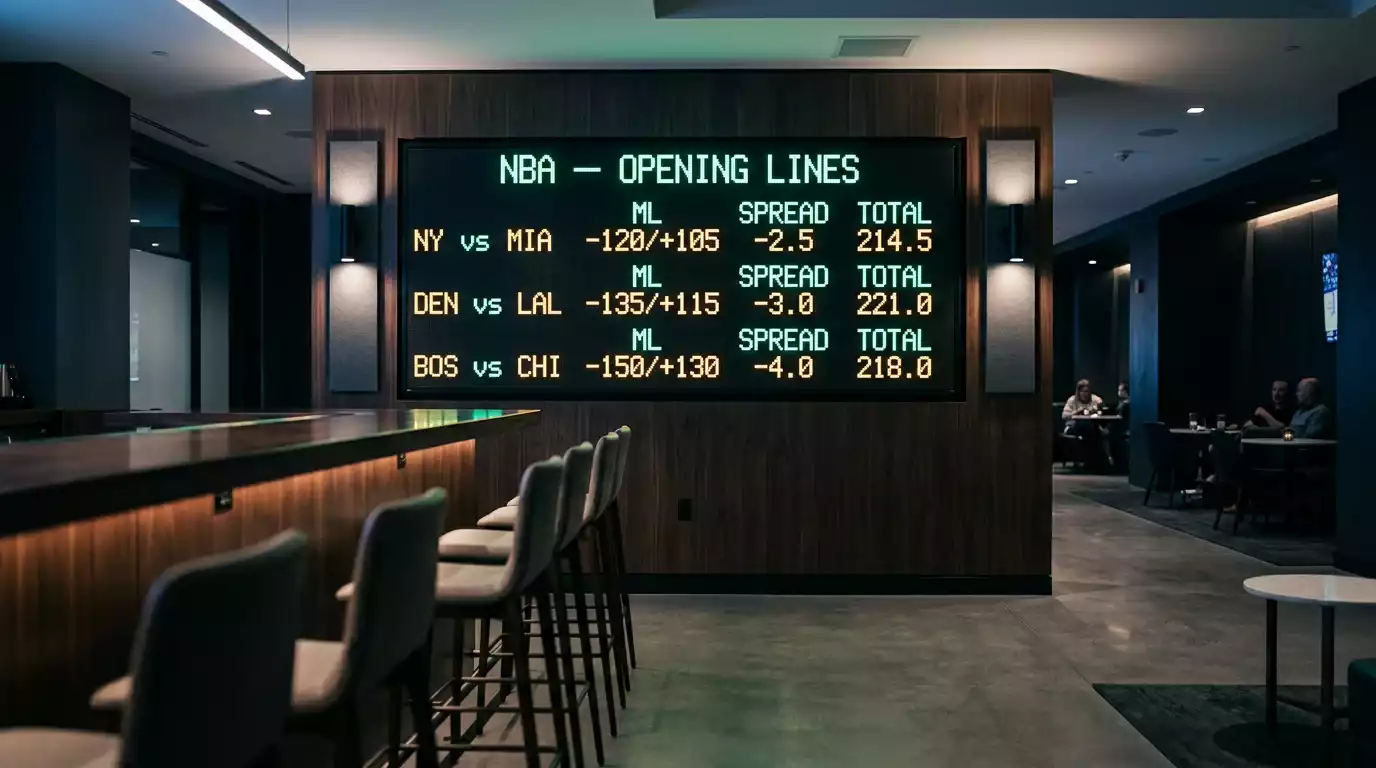
Last season I started tracking a habit that most bettors ignore: noting the opening number for every game I considered betting, then comparing it to the closing number at tip-off. Over 400 games, the average movement was 1.3 points. On 38 games, the line moved 3+ points. Those 38 games told me more about the betting market than any strategy article I’d ever read, because the movement itself is information — it reveals who is betting, when they’re betting, and what they know.
The opening line is the first number a sportsbook posts for a given game, typically released 18-24 hours before tip-off for NBA contests. That number is the book’s initial assessment of fair value, calculated from power ratings, rest data, injury reports, and home court adjustments. Everything that happens between the opening line and the closing line — the final number before the game starts — is the market processing new information. Sharp bettors fire early. Public money arrives later. Injury news creates sudden shifts. By the time the ball is tipped, the closing line represents the most efficient price the market can produce.
Understanding this lifecycle — from opening to closing — is one of the most underrated skills in NBA betting. The opening number isn’t sacred, but it’s the starting gun. Every movement after that tells a story you can read.
Who Sets the Opening Line and How They Do It
A small number of market-making sportsbooks set the tone for the entire industry. These books — the ones willing to take large bets at opening prices — post their lines first, and the rest of the market follows within minutes. The opening line-setter accepts early sharp action as the cost of being first, using that action as information to calibrate the line for the broader market.
The inputs behind the opening number are more systematic than most people assume. Power ratings — numerical strength assessments for each team — form the foundation. The line-setter’s model ingests offensive and defensive efficiency, pace, strength of schedule, and recent performance trends. It applies home court adjustment (typically 2-3 points), factors in rest days and travel, and adjusts for confirmed injuries. The output is a projected point spread that the line-setter posts, knowing it will immediately attract bets from the sharpest accounts in the world.
Opening lines aren’t perfect. They’re first drafts. The market-making book intentionally accepts that the opening number will be wrong by a point or two because the value of gathering information from early sharp action exceeds the cost of being slightly off. It’s a deliberate trade-off: post a reasonable number, let the sharps tell you which direction it’s wrong, then adjust. By the time the broader market opens, the line has already absorbed the first wave of informed money.
Three Forces That Move Lines: Sharps, Public, and News
The absence of a key player can swing an NBA spread by 4-8 points, making injury news the most violent force in line movement. But injuries are just one of three distinct forces that shape how lines evolve between opening and closing, and each force leaves a different signature in the data.
Sharp money moves first and moves decisively. Within the first hour of a line being posted, respected accounts identify their value side and fire. A $5,000 bet from a sharp account might move the line half a point, while $50,000 from recreational accounts might not move it at all. Sportsbooks track account performance historically and weight bets from proven winners more heavily in their line management. If you see a line move within the first 30-60 minutes of being posted with no injury news, that’s almost always sharp action.
Public money moves later and moves in predictable patterns. The public bets favorites, overs, primetime games, and popular teams. This money typically arrives in the final 2-3 hours before tip-off, when casual bettors check the board and make their decisions. If the line drifts toward the popular side in the hours before tip-off without any new information, that’s public money. The drift is usually small — half a point to a point — but it can create value on the unpopular side for bettors who’ve already positioned themselves.
News — injuries, lineup changes, load management announcements — creates the most dramatic and fastest line movements. The NBA’s official injury report drops in the late afternoon Eastern time, and secondary reports from team beat writers often break earlier. A confirmed star absence can move the line more in five minutes than all the sharp and public money combined over the previous 20 hours. The sportsbooks’ repricing window after injury confirmation is 30-90 minutes, and the bettors who react fastest capture the most value.
Reading Line Movement to Time Your NBA Bets
The practical question that every bettor faces: should I bet now or wait? The answer depends on which side you’re on and why the line is moving.
If sharp money is moving the line toward your side, bet early. The sharps are confirming your analysis, and the line is about to get worse for you. Waiting means accepting a worse number than you could have gotten 30 minutes ago. Conversely, if you’re on the opposite side of sharp movement, you might benefit from waiting — the line is moving in your favor, and patience gets you a better number.
If public money will likely push the line toward the popular side later in the day, bet the unpopular side early and bet the popular side late. This is the classic timing framework: grab the contrarian side in the morning when the line is set off sharp action, and if you must bet the public side, wait until the last hour when the line has moved as far as it will go. The half-point difference you capture through timing won’t win every bet, but over a season of 200+ bets, those half-points accumulate into meaningful closing line value.
If you’re betting around injury news, speed is everything. I keep a pre-built reference sheet of expected line movements for every high-impact player in the league. When a notification hits, I compare the current line to my expected post-injury line. If the current line is more than a point from where I expect it to settle, I bet immediately. If it’s already near the expected number, the repricing window has closed and the value has evaporated.
The broader lesson: line movement is signal, not noise. Every half-point shift between opening and closing represents money flowing into the market from people who believe they have information. Reading that movement — identifying whether it’s sharp, public, or news-driven — gives you context that the line itself doesn’t provide. The best NBA bettors I know don’t just bet the number on the board. They bet the number relative to where it’s been and where it’s going.
